Collapse
Not much time to write today, so even more plain-spoken than usual — which means all 14 of you out there will even be appalled.
There’s a lot of bloviation about collapse going on, and people like it, because it implies an easy answer. The old stuff just explodes; we then build something new. It sounds so easy, starting at square one.
Two big problems:
- Nothing happens slowly. With big things like nation, it’s a long slow slope of several hundred years. In fact, we’re in the middle of such a process and a larger one by which our parent culture has been falling apart steadily.
- There are no new ideas. We know the basic types of government; we can fine-tune these, but calling any idea “new” is really dubious. Historically, statistically, most revolutions and explode-build-new situations end with rebuilding of the old order.
These are super-radical and offensive ideas right now because they’re super-radical and offensive ideas in every age. Let’s do an illusion/reality chart:
| Illusion | Reality |
| Free will: we are autonomous beings who choose our futures | Biology: we are a collection of nerve impulses and chemical needs that believes in free will to explain its actions as “decisions” not impulses. |
| Open-minded: we’re open to any idea and have a good idea how to pick the ones that will work out. | Cloaking: we like things that appear new, aesthetically, but really we’ll endorse anything that weakens the demands of the world on us, and we have no idea how it will work out. |
| Victims: this world is divided between victim and oppressor, and we are usually the victims, so we must fight back against large governments, corporations and religions. | Competition: many ideas/designs compete through their avatars, meaning that a particular DNA sequence or corporate charter and product design is going to fight it out with all others, and whatever prevails is our new working design. |
| People power: if we all just band together, unite as equals, and work together, we’ll make things happen | Inequality: actually, that’s what we have been doing, but it doesn’t always work, mainly because not everyone has the same brains so some can see farther than others, and the others then oppose them |
| Separation: government and people are separate, and government should work for its people | Unity: government should work for an abstract ideal that benefits its people, and will use — and sacrifice some of — its people toward that end. |
| Benevolence: we all try to be nice to others because we love others. | Status: we try to be nice to others so we can be seen being nice to others so we can compete on the moral/popularity level of appearance. Altruism doesn’t exist. |
As you can see, the people bloviating about collapse are about fifteen steps behind accepting reality, so they concoct a nice Disney teen movie narrative:
In A.D. 2014, the evil nexus of large corporations, the Church and Republican politicians finally pushed its luck too far. The people rose up and instead of being guided by fear, joined hands and overthrew their oppressors, ushering in a new time when peace, love and happiness ruled the land.
You’ll believe that crap when you’re 18-32 and have few responsibilities in life, therefore have become unacquainted with how hard you have to work — mentally — in order to get anything to really succeed. Entry level jobs, school, early disposable relationships, social success… these all follow a linear course by which you succeed by doing more of and better of whatever others have done. The world beyond this stage: you must conceptualize what it is you want to do, and there’s no archetype to follow.
Of course, the astute among you are going to ask: but what about people who never progress beyond entry-level jobs, apartment-renting, irresponsible family life living? Answer: they remain children for life, and their opinions are those of children and should be ignored.
What I’ve said so far works toward a single point: the “collapse mentality” people are living in a dream. Our society isn’t going to suddenly explode and be re-made in a future world where we use logarithmic coefficients of our inner peace to determine who gets fed and who doesn’t. It’s still competition. Even more, we’re not going to explode suddenly, but transition gradually — think of how mountains become beaches — into a different stage of the process.
Briefly: how Plato outline the process of civilization was a life cycle. Civilizations have reckless youths, moderate maturities, and in their old age and dying time, become detached from reality itself. A simplification: aristocracy and competition is our youth; democracy and equal rights our maturity; insane oligarchs and tyrants our old age. But his bigger point was that each leads to the other, unless of course we intervene with forceful leadership.
In other words, our maturity of democracy is already a path to decline unless we reverse it. One of the great illusions people like to have is that history just happens to us, and we should lie back and think of England, but the historical record shows that it doesn’t happen on the same time frame universally.
Rather, intervention by strong centralized forces can save the day — while we can observe that nature operates in a decentralized way, we can also see how for us to succeed, we always must change how nature is acting on us, and in groups we do this with strong centralized authority. Think about camping: you need to make a fire, so you gather wood and burn it — not natural. When you’re camping in a group and need a big fire, you tell other people to conform to a standard, bring back wood and collaborate to light it. Otherwise, you get lots of little fires that burn out quickly because it’s hard work, this gathering wood thing.

People in democracies head toward slow collapse because they are dependent on illusions. When your politicians win election by saying things people like to hear, consequences become secondary to feelings and image. As a result, the way we think splits from “how will this turn out?” to “how does this make me feel?” That’s a fundamental bias against reality and is why we end up ruled by tyrants: a huge mass of selfish people pursue what is convenient and easy, ignoring consequences, until the problems they create pile up so much they demand an easy solution, which is always strong central authority. Of course, they pick that strong authority from their existing elites, who are corrupt like the rest of the citizens, and so they get a tyrant.
You can imagine an axis of civilizations, with the Vikings on one end and Brazil or Africa on the other. The Vikings were highly competent, intelligent people ruled by wise kings, who extended a quality of life to their citizens rarely seen in our world — and also had citizens of high intelligence and knowledge, on the whole.
Brazil, on the other hand, is a third-world country ruled by cruel oligarchs who manipulate an illiterate population for their own ends. In pollution, deforestation, murder, rape and dysfunction it leads the world. Lest you think this is a rant against Brazil: there have been many Brazils, like there have been many USAs, because if you organize your nation a certain way, you end up at Brazil status. Certainly ancient Greece, Rome and India ended up being Brazils after their collapses. I predict the same for the USA.
Third world countries are interesting because there are smart people there — but they’re a tiny minority, and tend to be either part of the elites or are totally marginalized and live in isolation. Look at Mexico or Argentina; a lot of smart people there. But they’re prisoners in their own country, and their low numbers and disunity mean they do not rule it but are ruled by the masses and their manipulators, which leaves them no choice but to get rich, get that gated community and get out of the game — which works until the masses really organize, get an extreme Socialist in power, and seize the wealth from those who earned it. This pattern repeats again and again, and one consequence is that many of these elites get killed — the rich for being rich, the isolated for not being all gung-ho about the new dogma — which reduces the average population IQ and the number of smart people there.
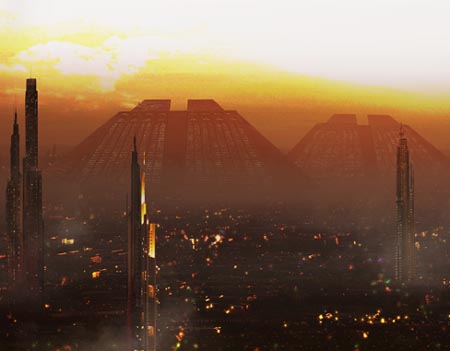
So what’s our collapse, now that we know it’s a slow decline into Brazil and not a fast drop into Mad Max, look like? A lot like how science fiction told us it would be — notably, Have Space Suit, Will Travel; Blade Runner (Do Androids Dream of Electric Sheep?); Neuromancer: a polluted industrial urban landscape in which much is ruined enough to not succeed, but never enough to stop working, and in which the ueber-wealthy few rule over masses of people living in squalor, addicted to entertainment and intoxicants, and joining political movements based on the It’s Someone Else’s Fault (ISEF) principle.
Part of the decline is that ISEF becomes our standard response, and we start expecting it — and only accepting solutions that involve some large governmental structure or economic system having “failed us” and dying:
1. Collapse is now inevitable
Capitalism has been the engine driving America and the global economies for over two centuries. Faber predicts its collapse will trigger global “wars, massive government-debt defaults, and the impoverishment of large segments of Western society.” Faber knows that capitalism is not working, capitalism has peaked, and the collapse of capitalism is “inevitable.”
When? He hesitates: “But what I don’t know is whether this final collapse, which is inevitable, will occur tomorrow, or in five or 10 years, and whether it will occur with the Dow at 100,000 and gold at $50,000 per ounce or even confiscated, or with the Dow at 3,000 and gold at $1,000.” But the end is inevitable, a historical imperative.
Capitalism isn’t the problem; civilization decay is. We confuse capitalism the advanced system of shuffling paper around — what Kevin Phillips calls “re-financialization,” or the selling of existing wealth in new forms instead of the creation of new wealth through manufacturing, invention and agriculture — with capitalism the process by which we buy and sell and compete. Money isn’t going away, nor is this essential decentralized process by which in a healthy society, better products win out over lesser ones. But what if the audience can’t tell the difference? That’s the origin of the problem with “capitalism,” in that people would rather spend $300 on video games and movies instead of $300 on stocks or tools, and it’s a symptom of the decline, not its cause.
That article redeems itself a paragraph later:
A crisis hits. We act surprised. Shouldn’t. But it’s too late: “Civilizations share a sharp curve of decline. Indeed, a society’s demise may begin only a decade or two after it reaches its peak population, wealth and power.”
Warnings are everywhere. Why not prepare? Why sabotage our power, our future? Why set up an entire nation to fail? Diamond says: Unfortunately “one of the choices has depended on the courage to practice long-term thinking, and to make bold, courageous, anticipatory decisions at a time when problems have become perceptible but before they reach crisis proportions.”
Indeed. And even more: what if we look in the wrong areas, and are trying to blame government, economics and religion for our problems, instead of looking to the cause?
Why do we seem to be plagued with 3rd-world country problems when we should be, by all rights, near (or at) the very top of the quality-of-life index?
I’ve been mulling this over for quite a while, and here’s where I’m at. I’m curious to get feedback.
Why do we allow ourselves to be taken advantage of? Wall Street bailout, wildly unpopular wars, no universal healthcare, we basically just roll over and take it. In France, the entire country came to a standstill because of protests and whatnot over some relatively small changes to the eduction system. Could you ever imagine anything happening like that here? Look back at the 60s and the anti-vietnam war movement. Aside from some mostly symbolic marches in major cities, what have we done to show our discontent with the whole Iraq/Afghanistan thing?
The problem is us.
We don’t give a fuck.
I’d like to say the education system is to blame, but the reality of it is that people in the US have never really valued education. We deride people who are academically-inclined or educated, we praise the “self-made man” who made something of himself without the need for formal training, we call them nerds, book-worms. No, we don’t value education, we don’t value culture, we rejected everything the “old world” taught us – threw the baby out with the bath-water, so now all we have left is an obscene culture of self-indulgence, self-gratification and self-obsession.
We’d be off oil in a month if we wanted, if we really truly wanted. But instead we watch our blu-ray DVDs in front of our nice new black friday purchased plasma screen TV (pointing the finger squarely at myself here), maybe throw $10 at some charity so we can look ourselves in the mirror and not want to vomit from disgust.
But in the end, it all falls squarely on our shoulder.
The reason this country is going to shit is because you and I, we’re not willing to give up our creature comforts, not willing to get off our asses and do something about it.
While the author of that comment goes on to endorse the fallacy that if we all just get involved, unite and people power and all that, the problem will end — unlikely, since most are clueless about the means and demands of power; a workable solution is to pick better leadership and not “hold them accountable” on the basis of image and not long-term, meaning 50 or 100 years, performance — the portion quoted above is the vital question.
If a civilization is declining, its people are declining. They have become detached from reality, and asserting reality is unpopular because it clashes with the happy image of this form:
- We should all unite
- We’re all equal in ability
- We need more compassion and empathy
- We need to protect victims
- We must raise up the poor
All of these are social sentiments, more appropriate to polite cocktail party conversation or advertising, but not political sentiments. They have nothing to do with the problem and are the sort of idle chatter we make about situations we cannot fix and have no hope of trying. With that attitude, no wonder we’re in decline.
I offer a competing wisdom:
Until we make truth and not image a priority, our decline will continue.
As long as we keep electing leaders who give us warm fuzzies instead of cold-hearted clear-eyed warriors for making things work, our decline will continue. To lead is not just to make people happy; it’s to make some unhappy so that civilization, as an organic whole, can survive. It’s similar to how we let some cells in our body die so that the whole can live on.
Keeping the individual pacified is a means to control, not the replacement of control. Control is always going to exist, because without centralized authority, we cannot make decisions as a civilization, and so are bound to a lowest common denominator lack of decision which results in high socialized cost, bad behavior going unpunished, good behavior going unrewarded, and as a result, a breakdown of social order.
Modern authoritarian states have eagerly (but selectively) embraced globalisation to provide their citizens with at least a modicum of self-actualisation without ever abandoning their authoritarianism. Their young people travel the world, learn English, use Skype and poke each other on Facebook “ all while competing for comfortable jobs with state-owned companies. We are entering the age of “accommodating authoritarianism†“ and the internet has played a crucial (though hardly the only) role in providing many of the accommodations.
The reason why the Chinese can download Weeds or Mad Men from peer-to-peer networks is not because the Chinese government can no longer police the web. It’s because watching Weeds and Mad Men is what young people living under contemporary authoritarians are supposed to do. These societies no longer operate in the world of cultural scarcity; it’s hard to nudge them towards dissent with the promise of blue jeans or prohibited vinyl records. For every Chinese blogger that the techno-utopians expect to fight their government via Twitter, there are a hundred others who feel content with the status quo.
In one respect, then, authoritarian states and modern democracies are very much alike: both have embraced hedonism as their main and only political ideology. The recent outburst of techno-utopianism in the West may thus be just another futile attempt to imagine a world where the purest ideal of Athenian democracy, uncorrupted by special interests and popular culture, is not only possible but could actually be facilitated by its more corrupt, frivolous, and somewhat culpable western sibling. This, of course, is an illusion. Citizens of modern authoritarian states face a choice between hedonism with stable prosperity (their status quo) and hedonism with unstable prosperity “ the hedonism that may follow a tumultuous transition to democracy.
Hedonism keeps the people inert. If their main goal is self-pleasure, all political activity is an afterthought — and if we all have enough food and entertainment, why agitate? We are immobilized by our comfort, and it divides us into 300 million individuals instead of an organic whole that can make decisions. So our leaders remain in power and benefit at the expense of the others. Our apathy as individuals, and their decision to profit at the expense of the rest, are part of the same disease: the individualism that insists on comfort, convenience and personal status as more important than the health of our civilization.
In exchange, we develop what are called “surrogate activities” which generally consist of talking with others, writing insignificant blog pots, and agitating among those who agree. We use this narrative:
We the people who aren’t rich are going to destroy the rich, overthrow governments, and burn down religion, so we can be 100% free.
(At that point, we’ll encounter the same problems that caused our ancestors to create government, religion and wealth, and we’ll then collapse in infighting.)
But until then, our friends like to hear how we’re going to beat back the bastards, so join up! It’s fun! It’s not a lynch mob if you mean well!
This is the real modern paralysis: we seek selfish individualism, deny reality as a result, and then are manipulated by image because that’s all that counts — mainly because of our dishonesty and urge to keep pursuing our individualistic ends and ignoring the consequences. Divided we fall. United… well, how can you unite when most people are repeating chaotic dogmas for their own benefit?
We flatter ourselves that we’re becoming more tolerant and more gentle, but really, we’re just allowing ourselves to be walked all over:
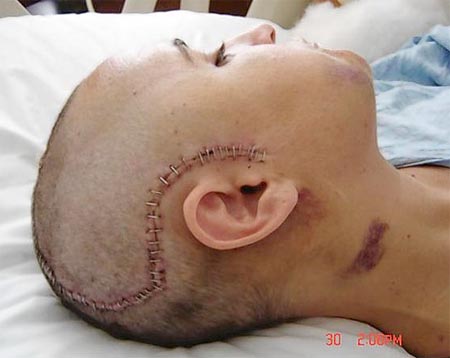
“My hair was down to my waist for 20 years,” she said. “I woke up bald — no teeth, 85 staples in my head — out of a drug-induced coma.”
Two hours after the photo was taken, Hall and Hoffman were attacked by a homeless man, Derrick King, near Wabash Avenue and Roosevelt Road, after telling him they didn’t have any cigarettes. King and a second person then beat, stomped and kicked Hall unconscious, she said.
When King, 48, pleaded guilty this October to two criminal charges in the attack and was sentenced to three years in prison, Hall and Hoffman thought he wouldn’t be able to harm anyone else — at least for a while.
But just 18 days after that plea, state records show, King was paroled as part of the early-release program that Gov. Pat Quinn on Wednesday called “a big mistake.” And the next day, King allegedly threatened another woman, near the same place he attacked Hall, yelling, “Remember the couple who got beat real bad for not giving a cigarette? That was me,” police said.
Because we cannot face our problems, they rule us.
We cannot admit — for the sake of social image and seeming like nice people — that some people are born bad, or become bad, but either way they’ll do nothing but victimize good people until we destroy them. Our education and rehab programs don’t work, and a century of intense psychological analysis has produced more neurotic people, not fewer.
We are even more forever caught up in an obsession with “helping the unfortunate,” but that itself is a replacement activity for fixing a civilization — an activity which would benefit us all, rich or poor. We don’t like to think that we are not autonomous free will beings of a godlike intellect, and that in fact, our abilities are determined at birth and our ability to act limited by those.
As our society goes into another paroxysm of battling for gay rights, immigration rights, diversity, class warfare, mental health for the criminal, and so on, remember that these three issues converge:
- Ethnicity (“Race”)
- Class
- Economic inequality
As we showed above, if you’re from a failed civilization you are most likely to have a lower IQ and have had the impulse to fix problems bred out of you. Further, different groups evolved for different climates and cultural/social needs, meaning that inequality is inherent to ethnicity. We cannot say that a given individual has certain abilities because they are of x ethnicity, but we can say that as a whole, x ethnicity is positioned relative but not equally to others. Even more, we can say that mixing different groups will produce an averaging effect because they are so different, not a refinement. Best of all, as shown above, we can see that the mania for “diversity” is just another form of class/inequality warfare that we’re engaging in as a substitute for fixing our problems. We’re using these people to avoid our own problems.
Class is a similar issue. What’s your IQ? This determines what jobs you are going to do and how well you will do them. If your IQ is below 100, you are an unskilled laborer for life. If your IQ is above 100 but not above 115, you’re going to have a simple job with minimal specialization. Starting at 115, which is where the middle classes of the world occur, you’ll see specialization and higher performance. 125 and above are the elites. Can you think of any exceptions?
Economic inequality is the result of this IQ inequality. Some people are born to be poor, others to be rich, and most in the middle somewhere. Some civilizations, having failed, produce a vast majority of lower IQ people and a few smarter ones. Class war, ethnic conflict, and economic inequality have a common origin: biological inequality. We like to pretend this doesn’t exist and flatter each other, but it’s the real stumbling point to our future — not everyone can unite, be happy and work together, because most cannot understand what needs to be done even if told in plain language.
At this blog, we spin it as we see it — meaning zero spin — so that those who aren’t yet brain-dead can see what the future requires: taking control from the masses, implementing a government based on results and not image, and tossing all this manipulation of feelings, popularity and advertising into the trash bin of history where it belongs.





- Popular
- Crowdism
- Ethnomasochism
- The Increasing Mediocrity Of Everything
- The Alt Right Is Tired Of Living In Mordor
- Nihilism Is The Basis Of Conservatism
- The Nationalism FAQ
- Beyond the Absolute
- Conservationism Versus Environmentalism
- The Self-Inventing Totalitarian State
- The Biological Basis Of Race
- Whites Going Their Own Way
- How Individualism Defeats Conservatism