Time

gateway_to_eternityWhen we think about politics, we tend to abstract away our concerns into measurable things, or at least, things that we can measure laterally. Money. Lives lost. Surveys.

These things oddly are tangible, in part because they’re intangible. Putting them in numbers renders the unknown to the known and the manipulable. That makes us feel powerful.

These things, no matter how spread out, can be grasped in an instant. We can summarize all that space into a single point or symbol. It’s different with time.

Events that occur over time are not easily summarized because they cannot be measured in singular conclusions, but must be shown to be curves. There is no way we can take time out of the equation and still be accurate; anyone who has ever blighted an A average with a failing grade can tell you about that.

As a result, we tend to forget about time. Our time, in particular. What do we do all day? We get up, and then there are things we have to do, and things we like to do. We question neither.

In part, this is because if we look too closely into the things we have to do, we will end up as total misanthropes. This is because most of what we do is wait for other people, sit in meetings and try to urge others to get along, interpret other people’s chaos, serve other people’s needs, etc. Most jobs are mostly waiting.

For another reason, we accept at face value any word handed down by society that something is necessary. We must go to jobs, to pay for our kids, etc. This is a quantitative assessment. It is binary: go to job (yes/no?). It assesses itself in terms of what is retained at the end. It does not look at qualitative concerns, like how this affects us, how it shapes our outlook on life, or how it makes us behave around our kids.

We are afraid to look at time because the more we analyze it, the more of our society falls away from the “necessary” label. In fact, looking at time would make us re-order politics entirely. We would have to stop focusing on quantitative results and have to start focusing more on the steps necessary to get those. We would start valuing efficiency again.

A large but not majority portion of our society fears the focus on efficiency. Efficiency requires we all work together. We would work less, thanks to advantages in networking and internal organization. By economies of scale, the results would be better across the board. But efficiency requires we defer our individual gratification until a goal is accomplished.

For most people, this is bothersome. They don’t mind an attendance requirement, because they’ll just move position to the place of attendance and resume doing whatever else they were doing (the rise of smart phones has aided in this grand solipsism). What they don’t like is having to give up their individual goals, even for a few moments, to participate in a group goal. That offends their sense of personhood and morality, in which the individual is always more important than the goal, nature, objectivity, reality, etc.

As a result, we pander to these people. Everything slows down. We can’t go forcing people to pay attention, can we? Instead, we must all move slowly toward goals that are written in abstract and lengthy standards. Inching forward by attendance, not accomplishment. And to pacify our fear of time, we waste our time, and then have no explanation for our sudden fervent rage.

Competition creates conformity

competition_as_conformityAll of us who grew up in the West grew up under a mythos that liberty, capitalism and freedom were better than the regimented societies we saw in Soviet Russia, Nazi Germany and North Korea.

The problem with this myth is that it’s true. Having someone tell you what to do is a motivation killer, and capitalism clearly works better than communism. However, “true” is the most dangerous assessment, because it is not Boolean.

We tend to think of truth in its conversational terms. “Billy is fat,” someone says. “Well, that’s true,” we rejoin. “But he’s not as fat as Sandra.” Both are fat, to different degrees. In certain contexts, Billy may not even be fat (among sea lions, for example). But in order to use conversational logic, we must assert first that our mental notion of Billy has that little switch flipped that marks him as a fatty fat pants.

In the same way, the West’s mythos is true, but only partially, which makes it the most dangerous mythos: the truish kind. Liberty is great. Not having any obligation to do anything but please oneself is great. Capitalism makes better products than socialism. These are all unquestionably true.

However, there are troubling qualifications to these. For example, capitalism tends to make better products, which doesn’t always mean superior objects. A Big Mac is a superior product, but no one is going to argue it’s better quality food than what you can purchase for a few dollars more. Planned obsolescence makes better products, like the iPods whose batteries you cannot replace, giving them a guaranteed short lifespan.

One of the underlying notions of our Western mythos is that competition will save us from such conditions. It doesn’t, apparently, although our libertarian friends tirelessly remind us that incompetence creates opportunities. The rejoinder is that when most people are OK with a Big Mac, there is no opportunity to unseat McDonald’s; you can be a niche success, but that’s as big as you’ll get. Same with Coca-Cola, pop music, junk architecture, Fifty Shades of Grey, etc. They’re junk food but junk food exists because of an inherent weakness in the human design.

This is one troubling aspect of competition, which is that it rewards our tendency to the lowest common denominator. Junk food is crass and cheap, but it is also comforting. It never changes. It is easily consumed and has no “troubling” flavors like asparagus or a tuna steak. Sometimes, it is the best option, and it’s clearly superior to the empty breadlines of Russia.

Another troubling aspect of competition is that it causes conformity. To see how this is, we should look at the experience of two upper-half-of-middle-class Westerners, Jenna and Max.

Jenna is going abroad for her senior year in high school. She is doing this because everyone else in her group seems to be competing for this result, so it appears to be valuable. She reasons that if something better had come about, it would have predominated over this type of behavior.

Max runs a small business. He notes that 75% of his competitors use the same technique of making widgets. He realizes that if he uses a different technique, and results are not as expected, he’ll look like an idiot for not simply doing what the others are doing. So he follows along.

In each case, people are relying on “the wisdom of the crowd” to provide the best options because that wisdom arose through or is enforced by competition. However, this creates a form of calcification. In Jenna’s case, the task — finding a meaningful or instructive use of her senior year — is replaced by conformity. In Max’s case, his need for a workable solution is subsumed to his fear of not keeping up with others.

Like civilization itself, competition is a double-edged sword. When the civilization or industry is new, people start from nothing and race to find a solution; here, competition is good. When the civilization is already established, competition becomes a way of enforcing norms on others by making them see a different task than the actual one, or fear being out of step.

Perhaps for Jenna the senior-year excursion became a time-honored process by which she engaged in the same activities as others and came to the same conclusions, foreclosing hope and opportunity. Perhaps for Max the “method” involved is wasteful, causes pollution or produces a Big Mac instead of an actually flavorful, nutritious burger.

As with most things, “magic bullets” solutions don’t exist; it requires actual intervention by a thinking being to know when to use competition, and when to use other techniques. But in a democratic society, we fear that anyone might have this kind of power, as (competitively) it puts them ahead of us; thus by our free choice we doom ourselves to repetition.

Collateral damage of the Cold War

cold_war_collateral_damageIf you are old enough to have lived through The Cold War, you will remember, at least partially, the sheer terror it caused you to experience.

For sheer fright value, nothing else even came close. An invading army might shoot you, even from tanks or aircraft, but at least you might see them coming, and have some chance to flee, or hide. But thermonuclear annihilation, at any moment, night or day, with absolutely no warning whatsoever; well that was something else again. And the threat of this endured every minute of every day, for years.

Hollywood, as always, managed to cash in on all this, with movies like Damnation Alley, Doctor Strangelove, and Twilight’s Last Gleaming, providing the trembling entertainment consumer with even more ways to scare themselves silly.

Even if the blast didn’t instantly incinerate you, this lethal menace called radiation would ensure you died a slow and horrible death, and with nothing at all you could do about it. I still remember the state of mind this created in me. It is, to all purposes, indescribable.

People, being different from each other, dealt with this in different ways. For my part, I hurriedly researched where I might stand a slightly better chance of survival, than overcrowded, used-up England, and decided upon Canada, with its vast wildernesses that I assumed were teeming with fish and game. It was, in retrospect, a spectacularly poor choice, for a variety of reasons, but time was of the essence, and the reality of the decision would have to be dealt with when the need arose.

Thanks, Freddie Laker, for your spectacularly inexpensive Laker Airlines, that allowed even a down and out pauper like me to escape. The Empress Of Canada — a huge DC-10 — bore me over the ocean, over Greenland, and Labrador, to Toronto, where I immediately set about making myself scarce, and disappearing so thoroughly into the far west, that even I had no idea of where I was for almost two years.

The game, was almost non-existent, as were the fish. There was almost no vegetation to eat. In winter it was cold-beyond-cold, and in summer, the mosquitoes and black flies almost drove me to suicide.

And this is the type of extreme measures The Cold War could drive a man to. Scary! But there were others. Ones who did not go into Robinson Crusoe mode. What of them?

There were those like my present wife, who, although just as terrified as me, reacted to the terror completely differently. She was the bravest of the brave. She realized that nuclear war was beyond her ability to do anything about, and so decided to simply get on with her life, and hope for the best. Many were more or less like her. The down to earth, reality-based types, that today form the core of conservatism. Then, there were the others…

The others largely consisted of people so scared that they started behaving as if every moment could be their last, and this gave them license to indulge in behaviour that would have been unthinkable, before. No appetite was left unsated. No taboo too serious to break. Antisocial behaviour became the norm, along with as much drink, drugs, and sex as possible, in order to experience everything a human could, before the fast approaching end.

These people could probably have survived everything else they did, but the drugs was generally what did for them. With any notion of consequences cast to the winds, no drug, in any quantity, gave them any cause for caution. They did it all, as often as they could, and did it year after year, while they awaited almost certain death.

Really, what they did, was cave in so completely to fear, that they retreated into their own minds, to bask in drug-induced euphoria, which had only one drawback: it wasn’t a permanent state, and so more drugs were always the biggest concern. And more. And more.

None of this was their fault, really. They were made to live on a knife-edge, between life and death, with nothing to be done about it. Instant gratification, now, was their only goal.

But retreating into one’s own mind carries unexpected penalties. The mind is not reality. It is more like a laboratory, where anything can happen. And if whatever happens is too bad, well, just think other thoughts, and no harm is done.

The idea of Utopia was born, in the drug-addled brains of countless young people. And in the safe laboratory of the mind, there was absolutely nothing wrong with, or in the way of it. Only them stinkin’ capitalist pigs, man! Them fuckin’ fascists!

And so the mind became the new reality, for the young. Leading, of course, to the notion of there being many, many realities. And losing all sight of there actually only being the one. And this is why it is impossible to communicate with leftists, today. Because leftists are those alienated, terrified, shell-shocked Cold War casualties, along with their offspring, who spend all their days believing that what goes on inside their heads is reality, and having no connection at all with the actual reality that lives outside.

This is the nature of Collateral Damage. The unexpected results of something that never actually happened, but ruined countless lives, simply by the possibility of it happening.

Conservatives have often had the feeling that leftists were completely mad, upon discovering this incomprehensible inability to detect, or respond to reality, that leftists exhibit. How can one reason with someone who has no reality but a made-up, imaginary one, that exists only in the mind?

It’s a horrific realization, that this is so. Tragic to the power of ten. But when you consider it, how can it be otherwise? This is the ultimate casualty of fear. The life-stealer.

I rather pity leftists, now, along with feeling the residual irritation that accompanies the cowardly behaviour of all those remaining, stubbornly, inside the blastproof bomb shelters of their minds, long, long after the war is over. We need them to come out! The Western world can not survive, very much longer, while too few try to cover the needs of the many, who produce nothing, wreck what is, and yap only for change from some unspecified thing to another unspecified thing.

Leftists. Not essentially to blame for the mass retreat into their own minds, and forgetting all about reality. The damnable thing is: not only did they forget what they hid away from, or why, but that they completely forgot it might be rather important to ever come out again.

War between galaxies commences, April 2013

explorers_of_outer_spaceThe day was winding down in futuristic America. As I write this (April 28, 1953) I can’t imagine what the future must be like. People probably travel by levitating platform, take nutrition from the sun and spend their days immersed in a great microfiche library, learning all of humanity’s past so they can make its future.

Visualize a calm, pleasant sort of day. The Marathon is winding down in Boston, a 2500-year-old tradition kept by modern people for its quaint antiquity and the boasting privilege of having mastered it. Suddenly, a massive explosion and smoke cleaves the afternoon at 2:50 PM.

As the debris and smoke clears, people perceive a large shimmering pointed object that has landed among the spectators, crushing three. On cue, a door slides open and a green-skinned man in elaborate clothing steps out. “I am Zokar of Zarniev, ruler of the mighty and crusher of the feeble,” he says. “Take me to your leader!”

Humanity’s first contact with alien worlds falls into a vacuum of silence. No one knows what to say. Then someone steps up and leads Zokar the Magnificent (as he’s prone to call himself in private conversation) over to City Hall. On the way, they pass an open Buddhist garden.

“Stop, I command you!!!” Zokar bellows and leaps over the wall. They find him holding a small frog. “A Zinzemilla! We have these on Zarniev, but not as large or as plump as these.” With that, he pops the frog in his mouth and consumes it. The procession continues to City Hall, then the White House.

On the way, the earthlings notice a few odd things about their guest:

  • He eats frogs. We covered that. He also likes worms, eels, kiwi fruit, brussel sprouts, gefilte fish and cabbage. In the same huge bowl.
  • On Zarniev, the customary greeting is to knee your guest in the testicles. If he does not recover within ten seconds and knee you back, you fight to the death by flinging panes of sharp glass at each other.
  • Zokar is not only the political leader of his people, but their spiritual leader. Twice a year they gather, and the leaders decide who are the weakest among them, at which point the rest kill these people by pricking them up to a billion times with a standard thumb-tack.
  • Women serve a different role on Zarniev. All they do is welding. As a result, they are required to wear their welder’s costumes everywhere. To keep this from being a problem, all wives and husbands are common property.
  • The purpose of Zokar’s tribe is to destroy all the unbelievers in the universe. In his view, you are either of his religion (Rayan) or you need to be subjugated and destroyed.

Now, planet Earth prides itself in being an accommodating place. As a result, they determine to treat Zokar well and set him up with state-provided housing in a large estate, lots of frogs, and an open line of credit at Whole Foods to purchase the rest of the bizarre stuff he enjoys.

All of humanity tries to avoid judging Zokar. While his ways are bizarre, repellent and seem backward if not outright pointless and stupid to us, we reason, we haven’t walked a mile in his shoes. We don’t know what factors of his upbringing made him as he is. He’s equal to us, except for circumstances.

However, Zokar’s arrival meant the end of this outlook. Zokar stayed on earth for two hundred and twenty five years, and during that time, humanity realized a few things. For starters, it was impossible to mention Zokar without having to immediately push back the thought of all those frogs, kiwi fruit and cabbage mashed up together. For another, Zokar made it clear that he did not share this outlook.

from_outer_space“Zokar is not moron,” he laughed in his thick and prideful voice. “There is only one planet, and only two choices. Either I rule this world, or you do. You cannot see this, because you see yourselves as many. I see you as one, and I am the other. Either this is Zokar’s world, or you will kill Zokar and rule it yourself.”

Many people contemplated these words. The general sentiment was to give it to him, because since inequality created conflict and conflict was bad, withholding our planet from Zokar would cause conflict that was the product of our own ignorance, hatred and fear. Better to just give it to him and adapt already. “It’s a small price to pay for peace,” said the President.

The pundits agreed. “What will the reign of Zokar be like?” Newsweek asked. The Economist pondered the many ways that Zokarocracy would increase our economic output. Mother Jones and Think Progress hailed the breakup of our “mono-browed, knuckle-dragging, primitive European Christian ways.” All agreed it would be a second Enlightenment.

Well, not everyone. On a mountain in West Virginia, Lemuel Jones cradled his shotgun. “What we oughtta do, boys, is figure out what we stand for in this country, and who we are,” he said. “Then take everyone who agrees with that, and keep them here, and send everyone else back with Zokar.” He was roundly mocked and vilified in the media.

When Zokar’s first pronouncement however was that all citizens must share him in dietary habits, humanity rapidly fractured. The assimilationists decided that it was most scientific, progressive and practical to get over their disgust and adopt the Zokar agenda now. They began wolfing down huge bowls of frog, cabbage, kiwi and eel mash.

The rest of humanity did not join the new movement, which Zokar called The Ideology. They had objections: the Ideology required them to lose their last names, stop practicing their religion, eat this new weird stuff, and adopt the customs of a far-off planet. “It’s not that we hate them,” said a spokesperson, “But that we love who we are more.”

However, that being 2013, and sixty hears of enlightenment ahead of my own time, I can only imagine that instead of following that dark path toward a Hitlerian intolerance, they simply accepted him as one of many views, even if it meant that Zokar would always wage war against them. It was a small price to pay for peace.

Sitzkrieg’s end

sitzkriegs_endNow that the tattered bunting of the Boston Marathon has been taken down, the grillwork security barricades stacked and put away and the shrapnel swept up, the chorus of self-flagellation has begun. The introspection. The blaming of the victims. The shaming of American patriotism.

We must apologize to the enemies, we’re told. If we apologize to them sufficiently, perhaps they will no longer want to kill us: the Chechens, the Iraqis, the Afghans, people who have been fighting for centuries or a millennium against far crueler adversaries than the United States.

We’ll apologize to them, shrill the leftists. These cries are passive aggressive. They’re passive aggressive toward those who disagree — those who think that we should, you know, hit back against those who attack us. They’re also passive aggressive toward the attackers. Imagine hipsters swinging their tatty leather messenger bags at amused Taliban personnel. Sneering at them and hoping they go away, those scary men whose truly foreign beards and sandals and checkered kaffiyeh scarves are so authentic but so inexplicably unhip.

Maybe sneering will work. Maybe the Taliban personnel will become annoyed enough to leave, back down to the construction zone by the 911 cenotaph where they’ve been busily planning a mosque. Maybe the North Korean gulag dictatorship will cease its nuclear ambitions. Maybe the Chechens will take their pressure cookers back to their boxing gyms.

It’s something wrong with our foreign policy, the leftists cry. Obama has been far too aggressive in his application of missiles from predator drones, surgical strikes designed to attrit the enemy, destroy their terrorist training camps and impinge upon their ability to deliver asymmetric attacks by boxcutter or pressure cooker or whatever black swan is next. And be sure that there will be a next one, and a next one after that, contemptuous little kicks to a tottering infrastructure and economy. Little hard-heeled shin kicks to let us know they’re still here, the sleepers, and to remind us that it hasn’t even started. The Big One. The Other Shoe.

The term Sitzkrieg refers to the period at the beginning of World War II, when hostilities had been formally declared but none of the belligerents had yet made any major moves.

Oh, those innocent days when hostilities were formally declared.

With world events going as they are, the bites of numerous little connected adversaries getting deeper, it’s hard to shake the sensation that our generation’s decade-long Sitzkrieg is over.

We don’t know exactly who sent the Tsarnaev brothers, though we certainly know where they came from. Chechnya has been torn by war before, last by the Soviets, who lost so much patience with the Chechens during the Grozny war that they literally reduced the city to rubble, going block by block with demolitions teams and saturation bombardments of artillery.

Some time after that, they had the Moscow Theatre hostage crisis and then the Beslan school massacre, both terrorist attacks of appalling barbarism, both perpetrated by Chechens. Russia resolved the attacks with characteristically greater barbarism: at the Moscow Theatre, over a hundred died from the unknown gas agent pumped into the building by the rescuers, and at Beslan it wasn’t clear how many of the hostages were killed by the terrorists and how many were killed by their Spetsnaz saviors. The Russians know how to make those sorts of calculations, and they’re not afraid to answer the ugly with even more ugliness.

Say what you like about their methods but the Russians know how to handle problems like that. There wasn’t much shuffling of feet in the Kremlin, not much wringing of hands trying to figure out how to behave. The Kremlin knew exactly how to behave.

Of course they were roundly chastised by the United States and the United Nations, roundly censured with much tongue clucking and finger shaking while the bodies were still warm. We supported the Chechens, back in the days of the Cold War: they kept pressure on the USSR as part of the Containment Doctrine.

Now the Chechens are here, and Soviet Russia has gone away, and the pressure cookers are in us.

A decade later, we’re dealing with those same people. People who are used to fighting the Russians, people whose cold calculus is informed by Russian and other asian methods of deception and asymmetric warfare. Those who shrilled conspiracy theories about the overwhelming paramilitary response in Boston would do well to remember that if reports are true, we still have a cell of ten to twelve Chechens running loose in Boston. Instead of shrilling, those people would do well to hope the Chechens are caught soon, since the tiny Chechen diaspora here in the US doesn’t offer much opportunity for hiding places and that means that whatever cells may be here will have to act quickly before they’re rounded up.

Back in the aftermath of September 11, the question was often asked: “Why do the muslims hate us? Why do they hate America?”

Since then, I’ve spent a great deal of time wondering why the leftists hate America. The truth is, they hate America because they hate masculine power. They hate authority. They hate the civil society that America represents, and of course, since they are products of the United States, as American as apple pie, their hatred is self-hatred: masochistic self-flagellation.

They hate America because they hate themselves.

They’re chattering hard, in their echo chambers and online coffee klatches, places like Salon and Huffington. They’re thinking about how to placate our enemies. Perhaps they’re secretly hoping that cruel men with convictions will come and end their repulsive weakness and degeneracy. End their directionlessness, give them the fear that might make life seem worthwhile again.

Though any Westerner with any sense would never make common cause with such monsters as the Tsarnaevs, those of us with any balls must look upon the shrilling leftists with more than a little contempt. At the end of the day, what common cause do we really have with them?

During the Boston incident, many of the leftist hate brigade did indeed quiet their shrilling, for a little while. Though they would never admit it to themselves, they were happy to see those black-helmeted, high-testosterone mesomorphs with scary black guns patrolling among their upscale apartments and latte houses. Making them safe, protecting them from a wounded nineteen-year-old boy with a pistol because they would never have the stones to do it for themselves.

Until recent events, many Americans have been very concerned about recent purchases by the Department of Homeland Security: over a billion bullets and over a thousand armored vehicles. It’s easy to be concerned by that sort of gearing up, but what’s more concerning, to those who have understanding, is the implication that the war may be heating up again, and that it may be coming here to the home front. That the DHS and other three letter agencies, organizations that we’ve paid hundreds of billions to gather intelligence, have been doing their job since 911.

That they may know something we don’t. Something that keeps them awake at night.

The latte-house set are sorely deluded in their belief that the rest of the world is part of the latte house as well. We — citizens of the Western Prosperity Sphere — have deadly, implacable enemies, and we’re going to have them as long as we have superpower status. When we no longer have superpower status, we’ll have a chance to see the true measure of states like China and Russia, and of the Muslim Brotherhood and their emerging hegemon. Putin said to Bush “The day will come when you long for the days of the cold war,” referring to the fracturing and balkanization of the established powerblocks into numerous foggy entities. After we’ve slipped more, fallen further into dirty socialism, taken our ball and civil society and gone home from the world stage, it’s possible that many of the pinkos who slandered us in all our missteps and little moments of goodness may think back fondly on the days of the United States.

If we fall, it won’t be for long. Something new will emerge, the way it’s emerging in Russia and in scattered green shoots all over Europe. Something strong.

Something the latte-house leftists won’t like at all.

Homogeneity and the blank slate

heterogeneity_or_homogeneityIn this topsy-turvy world, the fools are sure they are geniuses. Some may even be very intelligent and even genius by the IQ test marker, because intelligence generates such a flood of information it makes people easier to mislead. Ultimately what makes someone a fool is their will to mislead themselves.

Even very smart fools are still foolish because they have decided to escape from plain logic. Plain logic suggests that the world is as it is, and we the inhabitants of it must adapt ourselves to it. Fools instead prefer to think that they can alter how the world appears, and have thus created a higher “truth” than reality.

This is an artifact of the social process, by which my buddy comes to me and tells me that he has failed a test, his marriage has broken up, or his job isn’t going well. Because I sympathize, I tell him that the test was rigged, the ex-wife was no durn good anyway, and the job is not important. Then we go fishing and talk about good things.

That substitute reality makes him feel better, and lets time pass so that he can heal from the shock and change to meet the new circumstances. It is meant kindly; it’s as old as the hills. However, many of us know the difference. We know that reality is more complex than “the world is bad and you are good.”

From that simple formula we develop the idea of the modern “blank slate,” in which we assume all people are the same and differ in life condition only because life did things to them unequally. This allows us to extend confidence to their personalities, and bypass their actual abilities. It is kindly meant.

However, extrapolating from that — because no idea exists in a vacuum, and each effect of the prior idea becomes the starting point for the next idea — we develop the modern concept of “being different.” This is because, if we’re all the same and outcomes are arbitrary, we can only prove ourselves interesting or worthy by deliberate choices of appearance.

Thus enters a new religion: that of heterogeneity, or of everyone being different. We call it pluralism, and it takes many forms. First there is warfare to remove class, so that we are each different as individuals and not members of groups. Then we want to remove culture, nationality, ethnicity, gender, religion, etc. Nothing can come in the way of the individual being different.

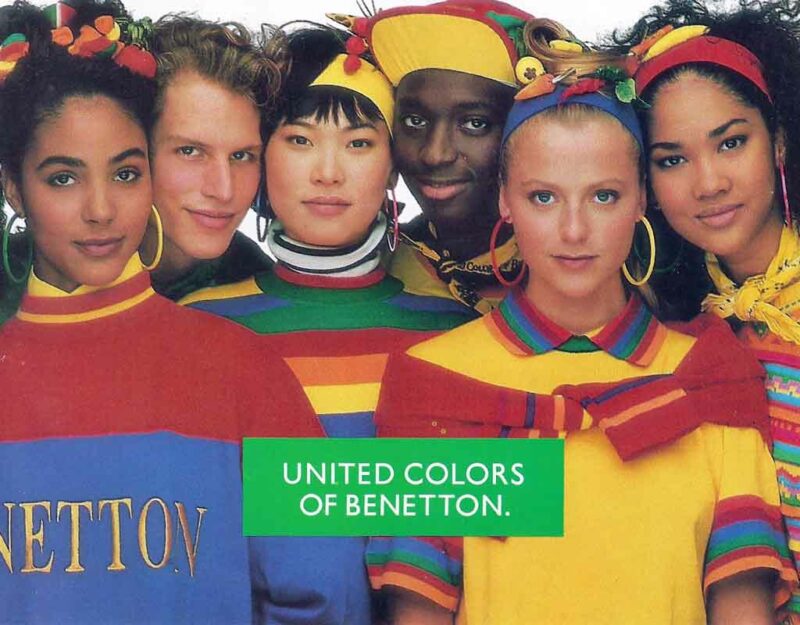
As part of this, we engage in the facade of “diversity.” In this, we invite people from all over the world to our country, where we intend to mainstream them and assimilate them with our non-culture, then force them to be different just like us by dressing outlandishly, having weird hobbies, Instagraming odd food, being quirky and ironic, etc.

But we should ask ourselves a vital question. Who wants heterogeneity? It would be interesting to see what type of personality is involved and the underlying psychological factors. And on the flip side, who are those who want homogeneity?

Let’s answer that one first. The type of person who wants homogeneity is someone who emphasizes efficiency and function over all else. With most people being similar, and acting in unison or independently toward similar goals, efficiency is at an all-time high.

This means that jobs, duties, etc. are done quickly and the focus returns to the individual. In fact, under this system the individual has a lot more free time. People who want homogeneity are people whose primary work is within, improving themselves through discipline and a transcendental view of reality. Our ancestors were like this.

And who wants heterogeneity? People whose “within” is empty, and who want constant distraction to fill the void left by its absence. For them, society is entertainment, jobs are socialization, duties are a chance to show off their uniqueness and life is without inner purpose.

People of this nature destroy everything they encounter, usually by slow subversion. There is room for only one love in their lives: themselves. However, they don’t express this by disciplining themselves or looking for larger meaning outside themselves. That would oppress the self. Instead they indulge it, and like a chaotic world instead.

The chaos helps them hide, among other things. A crowd full of diverse and motley people is the best place to conceal one’s own broken self-esteem, ill deeds, or even just lack of any real purpose or joys. When you are surrounded by chaos, it functions as a form of camouflage, so that you fade into the background. You do not stand out, because everyone is standing out.

They are only running away and hiding, however. The real challenge is within. Most of humanity is composed of individuals with low impulse control whose actions represent a tennis ball zinging from emotion to judgment to desire. They respond not deliberately, but to whatever pops into their heads at the moment. As a result, their decisions (and the consequences of those) are chaotic, inconsistent and often incomprehensible.

A lucky few use discipline to make their minds work more like deliberate organs. They encounter stimulus, whether without or within, and analyze it carefully before making a choice. Nothing is reaction, and emotion and/or socialization does not rule them. Unlike most of their species, they are truly liberated to own their own decisions.

This is the real blank slate, and the one the heterogeneity folks fear. Their minds are empty of preconditions and reactions. In contrast to that state of clarity, most of us look like impulsive animals. No one wants to be shown up like that, so many of our people invent the fanciful world of heterogeneity to hide that shortcoming.

For the sake of humans, replace the humans

the_unreliability_of_human_individualismAbout a decade ago, I identified the phenomenon of Crowdism whereby individuals demand to be freed from consequences of their actions, and band together into groups as a sort of mutual aid society that will attack anyone who doesn’t agree. This forms a hive mind that snowballs and soon creates a monolithic, paranoid Utopian groupthink.

The point of Crowdism is not that evil people exist, although they do, or that people are tempted by evil, which they are. It’s that stupid ideas exist and they sound good, and that in crowds, people bow down to the judgment of others and go along with the herd, resulting in destructive and illusory “solutions.” Socializing makes us dumb because we obey the social standard, not the reality standard.

An unpopular view, this was countered (coincidentally) by a spate of books praising “the wisdom of crowds” and other such flattering, pacifistic, and soothing nonsense. Their point was that in groups, we can guess average numbers well and so groups are obviously the right way to make a choice, because we can’t trust any single individual.

Logic dictates that this is nonsense because if we can’t trust any single individual with power when they are personally accountable, why are we taking those untrustworthy individuals and putting them in a group where they are totally unaccountable? Crowds are beyond accountability; if a crowd of 400 murders someone, you don’t kill all 400 in response. The punishment has to be divided by the number of members of the crowd.

However, nearly 230 years after we made rule of the Crowd the de facto standard here in the West, as exemplified in consumerism (crowd-sourced purchasing decisions), democracy (crowd-sourced leadership) and popularity (crowd-source social values), problems remain. For starters, Western democracies are crumbling as their vast entitlement programs implode. Second, the political problems we fought over throughout all of last century are still here, and they’re intensifying.

I guess you could say Crowd rule has been a total failure. However, the Crowd doesn’t care about the consequences of its actions. Its only concern is staying in power, so that its individual members do not have to face consequences of their actions. The result, starting in the second half of the last century, has been an accelerated drive to complete Crowdist takeover of the world, so that there will be no dissenting voices.

Political correctness, the new internationalism, pluralism/relativism, the United Nations (“world federalism”), entitlements, wealth transfer, etc. are social policies with a singular goal: to blot out any notion that there could be another way. This, we will teach our children, is civilization. Without it, there is nothing but savagery. And thus control will be maintained.

Not quite so fast there, humanity. It’s unclear whether the population has caught on to what a desperate power grab, mostly fueled by Baby Boomer wealth and votes, this has been, but it’s clear that people no longer trust each other. As social chaos increases, so does paranoia, and so does notice that people aren’t as peachy as others think they should be. In fact, we all want most of the rest of them to be gone.

Even more, we’re now seeing examples of how crowdsourcing fails. Take the complete ineptitude of the online crusaders who not only completely missed the Boston bombers, but identified the wrong people. Or the advances in robotics that are replacing unreliable, resentful workers. Never a union riot again.

The Crowdists knew their plan was not workable. They’ve never pretended that it actually works; they focus on what it gives in the short term and ignore its long term consequences. If we boil their ideology down to its root, it is selfishness and a desire for no accountability, which is why they accuse their opposition of being that as well. But the big joke is that it’s not a political doctrine, but a social one, and it’s oblivious to its effects.

As a result, it’s falling apart. This means that the Crowdists are pushing harder to bind us all together into a single mechanical system, whether one world government or something like the EU, so that we must all go down together. It’s a subtle form of collective punishment. We must make the crazy ideology work, or we all suffer. Sounds good.

However, somehow the world isn’t cooperating. All those details that the Crowdists pushed out of the way to make room for ideology have come together to make the plan fail. The Crowdist notion was that the world would be great with a few changes; they didn’t think to anticipate that those changes might in turn make others, and then others, in a chain reaction that’s out of Crowdist control.

What we’re seeing now is a mania by committed Crowdists to take control. Obama is this; Merkel is this. They can’t admit they were wrong, which would be on par with admitting that their lives’ work is a failure. Instead, they push on because their egos are too terrified of the alternative to be flexible. Thus we march in trope toward the abyss!

And yet, much as we’re seeing now, people are deciding to work around The People. We’ve realized that human nature is variable, but most people are sloppy and refuse to be honest about much of anything. Thus we replace them with robots, and filter them out with laws. As this civilization winds down, we’re building the next.

Let me pitch to you what that will look like: a vast industrial wasteland, riddled with disease, criminality, petty warfare, poor hygiene and corruption, offset by smaller suburban and rural areas which take people on an opt-in basis. To get in, you give up some bad habits and a lot of rights. But you get out of the wasteland.

These demi-republics will be organized by organic group, such as religion, culture/ethny, philosophy and social class or caste. They will not be unfriendly to outsiders; they just won’t let them in. There will be no pretense of rights or freedoms. You join these places because the acts you need to do are permitted and everything else verboten.

In exchange however you get the opposite of the failed Crowdist world which thrashes outside the electrified walls and gun turrets. You get a chance at a normal life. As the great hive mind vision winds down into chaos, people will defect at increasing rates, swelling a new society at the expense of the old and dying one.

Brett Stevens interview at the Association for the Protection of the Lebanese Heritage

association_for_the_protection_of_the_lebanese_heritageConservatives preserve the permanent things by holding on to that which not only works, but creates a transcendent beauty in life. This is why we idealize “the good, the beautiful and the true” and is why we conserve these things where we find them, resisting a tidal wave of human individualism and short-sighted solipsism.

The seeming paradox of this outlook is that, unlike modernism, it does not prescribe a single standard for all people; rather, it says that local standards should prevail. Unlike pluralism however it does not suggest many standards coexisting in the same place, but that they exist in parallel; this is the philosophy of parallelism espoused on this site.

As such, we who strive for the transcendental ideal are brothers and sisters, fathers and mothers, and cousins and colleagues to all who uphold tradition, values, art, beauty, religion and the human soul worldwide. Ours is not a universal language, but it is a universally applicable principle that benefits all civilizations that adopt it.

What makes this difficult is that, unlike modernism, our view is not centered in the individual as an oppressed antagonist of society at large. Instead, it sees civilizations as organic wholes in which each person serves a different but necessary role. There is no equality; better than that, there’s exclusive necessity.

All of this is a way of providing you an introduction to an interview done with myself by the good people at the Association For the Protection of the Lebanese Heritage (APLH), who have published the most recent edition of their newsletter which includes some words from myself toward all transcendental conservatives worldwide.

While you’re at it, you might want to prowl around the site. In particular, the projects page and gallery are worth perusing for ideas for practical intervention in your own community to prevent its decline.

A flat plastic world

political_correctness_a_lurking_poisonLife has many paradoxes, and many of those are caused by a simple principle: whenever you pass over any kind of border, all values become inverted. This is because context has changed, and you are now looking for the antithesis of what defined whatever was on the other side of the border.

The paradox of political correctness is that in the name of including everyone, we exclude everyone, because as we pass the border between the self and society at large, we invert our values and start working against what we want. This fact is obscured because most people do not see political correctness as driven by individuals, but by the group.

In actuality, what makes PC work is that it panders to individuals who fear the judgment of others and thus demand the group make judgment of consequences taboo. What replaces it is judgment of methods, or did you follow the correct process? Whether it turned out well or not is irrelevant.

Unstable, damaged, fearful and low self-esteem people like this because it removes all challenge from life. They don’t need to figure out the right way to do anything because they’re not on the hook for consequences. Instead, what they must do is figure out a reasonable procedure, or claim they were doing one, and they’re OK.

As a result, we ban all words related to difference in position (race, gender) and outcome (class, ability). The problem with this is that it condemns conversation to the surface and vapid one-dimensional plastic space of interaction used by salespeople, school administrators and other euphemism addicts.

By using politeness to obliterate unpleasant or challenging truths — this is the opposite of the original purpose of politeness, which was to allow us to navigate sticky situations without clobbering each other — we make each individual his or her own censor. This is ironic, given that PC is designed to protect the individual.

Some would say it does; a retarded person can now be called some euphemism like “differently abled” instead of a word which points out the obvious developmental delay or dysfunction that makes them dumber than everyone else. But the retarded person must now learn the special terms for every other group out there. It’s a minefield.

This Soviet concept of political correctness also means we cannot disagree with anyone on anything of importance, or they’ll get offended. To political correctness, information itself is a method and methods can be regulated. The idea is to prevent you from reaching certain conclusions through language, and thus to weed them out of the population.

However, offense is in the eye of the beholder, and like any kind of absolute power, it corrupts absolutely. Why strive when you have a get-out-of-jail-free card? Why learn to debate, when you can win a debate by Godwining (or near analogue: shout “racist”) your opponent?

The result is utter vapidity. By avoiding conflict, we’re avoiding meaning and any possibility of actual conflict or change, which is what results from people disagreeing and then hashing it out so that one wins. Having a winner is offensive in the PC world, but it’s how life necessarily works. It’s how math works and Darwinism works.

The mechanism behind PC is the individual deciding to be offended. When they decide information is bad, they claim the method is bad, and use that to imply bad faith on the part of the individual. “He intended to offend me” is the next step after “I’m uncomfortable with that word.”

It makes for a society where no one says anything important. You’re limited to topics you can have with a salesperson. How’s the weather, favorite video game or pop band, sports teams, best place to buy rutabagas (in cans). This even extends to conversation among close friends, because PC has a profit motivation to it.

A profit motivation? Even socialists (cultural Marxists) know what a good thing individual motivation is. The profit motivation is that the person who finds a PC violation in another person is now a hero. They have defended us against the evil oppressive monarchist-fascist fundamentalist rich white people who want to oppress us!

Thus even a private conversation is difficult. If Bill and Bob are talking, and Bob accidentally refers to the pot calling the kettle black, Bill can trot on down to the local Empowerment Center and report Bob. Bill is now the hero. Bob is now a threat, and must be re-educated. And Bill gets Bob’s (former, hahaha) promotion. Justice is done.

Our society staggers ahead like a zombie riot. We are afraid of losing our own places, so we conform. We are also afraid of not gaining a position like Bill did, so we report each other. Reality drifts farther away, as we make our inexorable path to doom. But this is the plastic one-dimensional world that PC creates.

As individuals, who in theory would benefit from PC, we are thrust into a defensive mode. PC threatens us because even innocent comments can destroy us. And so we replace real conversation with a fragile polite surface, and because it’s fragile, get militant about it. Soon we are at odds, alienated from true friendship, in the name of kindness.

The result changes society on every level. Our conversation is vapid, but even more, our values become vapid. We avoid anything that may cause conflict, which freezes our social development as surely as North Korea’s economy. This creates a world of pleasant illusions spoken out loud, but just underneath the veneer, a snarling animal cannibalism.

The end of the age of binaries

ruins_of_a_once-great_empireWhat do we really expect from our news media? They are people who ask questions. Others answer those questions, as they see fit. These answers often have nothing to do with reality.

News media also must sell their news-entertainment product, so they chase after the biggest stories they can find. They are rewarded for getting their first and bringing it “to the attention of the public,” and only secondarily for getting the details right. They are not rewarded at all for unpopular or complex topics, or worse, unpopular complex topics.

Does that mean I should trust the media to tell me the truth? That’s a binary question: I can answer yes or no, or duck out of the question with “I don’t know” or inexact terms like “sometimes.” Ducking this question is the correct answer because the question is framed as a binary.

We are in the grips of a narrative, which is a story that we tell about ourselves that explains how we are good and right, that has held us for the last 224 years at least. It is a binary: it is the story of the oppressive natural majority and their ways versus the rights of the minority group, which includes any individual who is not happy with the way the majority does things, or even how things are going.

All of our movies emphasize “the little guys” joining hands to take down the big guys. At first it was kings, then Hitlers, now it’s corporations. All of our news articles emphasize the individual opposed by restrictions imposed by the rest of us or by reality itself. Rebellion is seen as an act of honor, goodness and mercy.

Yet none of these rebellions actually solve problems. They generate drama, and make us think kindly of one or more people, but they don’t end the situation described. They may take out one or more bad actors, but those are immediately replaced. The war never ends. The revolution never ended and never will, if they can help it.

One of these narratives is majority versus minority in terms of race, ethnicity and culture. The first blood of the French Revolution was barely dry before the revolutionaries started calling for “internationalism,” or that we would abolish all borders and everyone can go wherever they want. (It took the revolutionaries another century to realize that they would need to demand welfare as well, because the real limiting factor on travel was cost.)

Internationalism lives on as multiculturalism, which itself is a form of pluralism, which is basically “everyone do what they want.” Pluralism is expressed through tolerance of different points of view, and basically says we live and let live. The only casualty is any kind of social standard, and the higher standards die first. it’s a race to the bottom.

Pluralism is such a brilliant sleight of hand that useless people have invented it in every society, culture and small group known to human kind. Basically, such individuals want zero oversight; they want to do whatever they want and to have other people be forced to put up with their laziness or other dysfunction.

The only way to “sell” this type of idea to other people is to demand it for everyone. Soon you have a mob chanting for pluralism, but what they really mean is that they want to destroy the majority and destroy the idea of common social standards and values. They want personal anarchy, but others to keep civilization going so they can enjoy it.

In many ways, this was the greatest sales job in history. People who wanted anarchy and were willing to band together to demand it, or Crowdists, sold others on the idea. Those others then would object loudly if anyone tried to stop them, on the grounds that they were “peaceful” (which has nothing to do with the consequences of one’s actions) and being “oppressed.” Victimhood quickly became a weapon.

With it, this sales job brought a history permanent trapped in binary thinking. Yes/no; good/bad; majority/minority. However, this model is cracking because it was never realistic. It was created as a marketing jag to convince the useful idiots of the world that there was one enemy, and banding together to destroy it would fix all problems.

If you’ve read the ancient tales of the scapegoat, which was a sacrificial goat into which a community cast its own evils and doubts and then murdered it, or the witch hunts and lynch mobs of the last few centuries, you know exactly what this is. “Everybody gang up on the big guy, and then we can do whatever we want!”

As a result, anyone who was not wholly with the majority was free to join the revolution. At first it was only ethnic minorities, homosexuals and drug users. But the franchise increased to the point where even non-conformists and hipsters could join. The revolution snowballed.

But this coalition had a fragile point: it only worked so long as everyone saw themselves as unified in opposition to the majority. The enemy of my enemy is my friend, right? But this is now obsolete, because the consequence of pluralism is that society fragments into infinite groups, and by the nature of having fragmented, they don’t agree with the others.

For example, our nation’s prisons segregate inmates by race to reduce violence. It’s not just the white people who cause problems. It’s every group representing its interests against every other group. This destroys the idea of a common ground and goal. It’s take what you can, and give nothing back.

The same thing is true of our economy. The Civil Rights Commission recently released a report revealing that amnesty for Hispanics would disproportionately harm African-Americans. Shocking new — we’re replacing one group with another. The old game was blacks versus whites. The new game is every group against every other group.

With this illusion, two centuries of promises die. But that’s how it always is with advertising, isn’t it? It’s only after the warranty runs out that you realize you’ve been sold an illusion. And then, no one will pay to fix it but you, and you’ll pay a lot more than if you’d just left it alone (don’t fix it if it ain’t broke) in the first place.

39 queries. 1.132 seconds